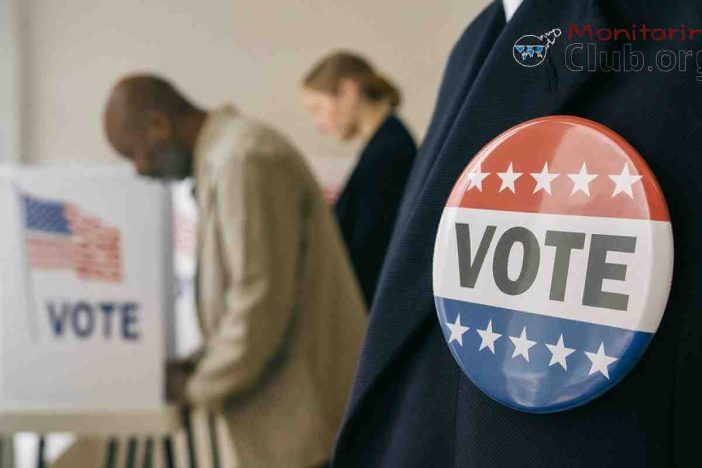
Americans gather every four years to choose a president, yet even inside the United States many citizens admit they don’t fully understand How Does the US Presidential Election Work. The process is long, layered, and often dramatic. It’s a political marathon shaped by debates, primaries, conventions, national campaigns, and the decisive moment when the Electoral College system casts its votes.
To an international observer, the system can feel confusing; to a first-time voter, it can feel overwhelming. But behind the noise lies a structured process built over centuries, influenced by history, law, demographic shifts, and evolving political culture.
In recent surveys from the Pew Research Center, nearly half of Americans reported that they only “somewhat” understand how presidents are elected. This gap reveals why mastering the US election process is not only useful but essential, especially when elections influence global markets, foreign policy, climate decisions, and international relations. Understanding the framework gives readers a sharper lens to interpret polling data, campaign strategies, and why certain states receive more attention than others.
This guide dives deeply into every stage of the election cycle, transforming a complex system into an accessible, insightful narrative grounded in real data, historical context, and clear explanation. Whether you’re a voter, a student, a journalist, or a curious reader abroad, this article is designed to become your definitive resource.
7 Amazing Facts About the US Election Process
1. The Journey Begins Years Before Election Day
The race for the presidency doesn’t start when ballots open. It often begins two to three years earlier, with exploratory committees, fundraising, donor meetings, and early endorsements.
Political strategists study demographic maps, digital behavior, social-media sentiment, and historical voting patterns to determine whether a candidate has a viable path.
2. Primaries and Caucuses Decide Who Gets to Run
Before the general election begins, political parties must choose their nominees. This happens through primaries and caucuses held across all 50 states. Here’s how they differ:
Primaries: The Most Common Method
Most states use primaries, where registered voters cast secret ballots to choose a candidate. Primaries mirror normal elections and are easier for new voters to understand.
Caucuses: A More Hands-On Approach
Caucuses involve meetings, discussions, and physical alignment with preferred candidates. Iowa is the most famous caucus state, and historically it plays an outsized role in shaping media narratives.
Delegate Math Determines the Winner
Candidates collect delegates based on their performance. In Democratic contests, delegates are awarded proportionally; Republicans mix proportional and winner-take-all systems.
Once a candidate reaches the required delegate threshold, they effectively secure their party’s nomination.
Research from the Pew Research Center offers continuously updated insights into voter behavior, political engagement, and national sentiment, helping readers understand the broader forces shaping every US election cycle. By examining long-term polling trends and demographic patterns, visitors can compare historical shifts with current campaign dynamics in a meaningful way. The dataset also provides nonpartisan analysis, which gives your audience confidence that the information they’re consuming is grounded in credible evidence rather than speculation. Directing readers to this resource strengthens the educational value of your article and positions it as a gateway to deeper political understanding.
3. National Conventions Seal the Nomination
Every four years, both major parties host massive national conventions. These events serve three purposes:
- Officially nominate the party’s presidential and vice-presidential candidates
- Rally supporters and energize national enthusiasm
- Present the party platform, outlining policy priorities
The conventions also mark the formal start of the general-election campaign.
4. The General Election Isn’t Decided by Popular Votes Alone
Many people abroad are surprised to learn that the candidate with the most votes nationwide doesn’t automatically win the presidency. Instead, the United States uses the Electoral College system, an institution created in 1787 as a compromise between electing presidents through Congress or through direct popular vote.
Why the Electoral College Matters
Each state receives a certain number of electors, equal to its members in Congress. There are 538 total electors, and a candidate needs at least 270 to win. This means that winning states strategically is often more important than winning the raw national vote.
States Carry Different Political Weight
For example:
- California holds 54 electoral votes
- Texas has 40
- Florida has 30
- New York has 28
Meanwhile, some states have only three. As a result, presidential campaigns pour disproportionate resources into “battleground states” such as Pennsylvania, Michigan, Wisconsin, Georgia, Arizona, and Nevada.
5. Swing States Decide Modern Elections
A swing state (or battleground state) is one where neither major party consistently wins.
In the last four presidential cycles, fewer than 10 states truly determined the winner. For example, in 2016 and 2020, states like Wisconsin and Pennsylvania shifted national outcomes by narrow margins—sometimes fewer than 50,000 votes.
Why Swing States Hold Extraordinary Influence
- They attract massive campaign spending
- They receive more candidate visits
- Media coverage focuses heavily on their polls
- Voting behaviors in these states often set national narratives
6. Election Day Is Not the Final Step
Although millions vote on the first Tuesday after the first Monday in November, the presidency isn’t officially decided that night. Several critical steps follow:
Counting and Certifying Votes
Each state certifies its results through bipartisan procedures, often audited and reviewed by secretaries of state.
Electors Cast Their Votes
In December, electors meet in their respective states to cast the official presidential and vice-presidential votes.
Congress Confirms the Election
On January 6, Congress convenes to certify the Electoral College results. Only then is the election formally complete.
7. Inauguration Day Transfers Power Peacefully
On January 20, the president-elect takes the oath of office. This symbolic and constitutional moment represents the orderly transition of power, a cornerstone of American democracy.
How How Does the US Presidential Election Work Shapes National Strategy
Campaigns Invest Billions in Voter Behavior
Modern campaigns operate like data-driven corporations. They use AI-enhanced modeling, predictive analytics, social-media mapping, and behavioral segmentation to identify persuadable voters.
In 2020, presidential campaigns spent more than $14 billion combined, making it the most expensive election in US history.
Media, Misinformation, and Influence
With over 200 million Americans online, digital persuasion is now as crucial as traditional rallies. Understanding misinformation, media bias, and algorithmic influence is increasingly vital for citizens.
The Role of Voters in the US Election Process
Registration: A Legal Requirement
Unlike many countries with automatic registration, the US requires most voters to register manually. Deadlines vary by state.
Early Voting Expands Access
Many states allow early in-person voting and mail-in ballots, dramatically increasing participation.
Turnout Rates Reveal A Lot
Despite having one of the most influential elections in the world, US voter turnout remains lower than in many OECD countries.
Why Understanding the Electoral College System Matters
Mastering the structure behind presidential elections allows voters to evaluate:
- Why campaigns prioritize certain states
- Why polling errors can shift national expectations
- How voter demographics influence the final outcome
- Why close elections can produce recounts and litigation
Final Thoughts
The presidential election is more than a national event; it’s a global spectacle that shapes international markets, alliances, military strategy, climate policy, immigration, and the balance of world power. Understanding How Does the US Presidential Election Work, along with the broader US election process and the mechanics of the Electoral College system, gives readers the clarity needed to interpret headlines, evaluate candidates, and appreciate the complexity behind every American vote.